Reaching 150,000 miles does not mean a vehicle is worn out. Plenty of cars and trucks still have years of useful life left at that point. What changes is the number of parts that have already been through thousands of heat cycles, bumps, cold starts, and highway miles.
At this mileage, we stop looking only at what is due on the maintenance schedule. We also pay closer attention to wear, leaks, noises, and parts that are still working but getting close to the end of their service life. A thorough inspection gives us a much better picture of what the vehicle needs now and what you should plan for next.
1. Check the Cooling System for Leaks and Aging Parts
Cooling-system problems become more common as rubber hoses, plastic fittings, seals, and water pumps age. A small seep that barely leaves a mark today can become a major coolant loss later.
We check the radiator, hoses, reservoir, thermostat area, water pump, and obvious connections for dried coolant residue or active leaks. The coolant itself also deserves attention. Old or contaminated coolant loses some of its corrosion protection and should be serviced according to the vehicle's requirements.
If the temperature gauge has been running higher than it used to, don't wait for a full overheating event before having it checked.
2. Look Closely at Belts, Tensioners, and Pulleys
A serpentine belt can still be turning the accessories while showing clear signs of age. Cracks, frayed edges, glazing, missing rib material, or contamination all tell us the belt needs attention.
The tensioner and pulleys matter just as much. A weak tensioner can let the belt slip, while a rough pulley bearing can damage a new belt in a short amount of time.
At 150,000 miles, we listen for chirping, squealing, or bearing noise and watch how the belt tracks. If the engine uses a timing belt, its replacement history is especially important because skipping that service can lead to serious engine damage.
3. Inspect the Suspension and Steering
Shocks, struts, control arm bushings, ball joints, tie rods, and sway bar links all take a beating over 150,000 miles.
You might notice clunks over bumps, extra body movement, loose steering, uneven tire wear, or a vehicle that does not hold a straight line as well as it once did. Sometimes the change happens so gradually that the driver gets used to it.
We check for looseness, torn boots, leaking dampers, cracked bushings, and anything that changes wheel movement. Replacing worn suspension parts can improve tire wear and make an older vehicle feel much tighter on the road.
4. Check for Fluid Leaks Before They Become Major
A slight oil stain around a gasket is not the same as a leak that drops the fluid level between services. At higher mileage, telling those two situations apart becomes important.
Engine oil, transmission fluid, coolant, power steering fluid where applicable, and gear oil can all begin leaking as seals and gaskets harden. We look at where the fluid starts, not just where it finally drips.
Catching a leak early often keeps the repair smaller. It also prevents the vehicle from spending months running low on a fluid that lubricates or cools an expensive component.
5. Review the Transmission Service History
By 150,000 miles, we want to know what has already been done to the transmission. If the fluid has been serviced at sensible intervals, continuing that maintenance is usually straightforward.
If the history is completely unknown, we look at the transmission's operation and the manufacturer's service information before making a recommendation. A transmission that shifts normally is different from one that slips, bangs into gear, or hesitates before moving.
6. Check Engine Mounts, Spark Plugs, and Ignition Parts
Engine mounts soften and crack with age. When they do, normal engine vibration gets transferred into the body, especially at idle or when shifting between drive and reverse.
Spark plugs can also be due depending on the engine and what was replaced earlier in the vehicle's life. Worn plugs put extra demand on ignition coils and can lead to hesitation or misfires under load.
We also look for oil inside spark plug wells, damaged coil boots, vacuum leaks, and other age-related problems around the engine. At this mileage, one small issue can easily be hiding behind another.
7. Inspect the Brakes, Tires, and Wheel Bearings
Brake pads and tires get checked regularly, but at 150,000 miles we also pay closer attention to the parts around them.
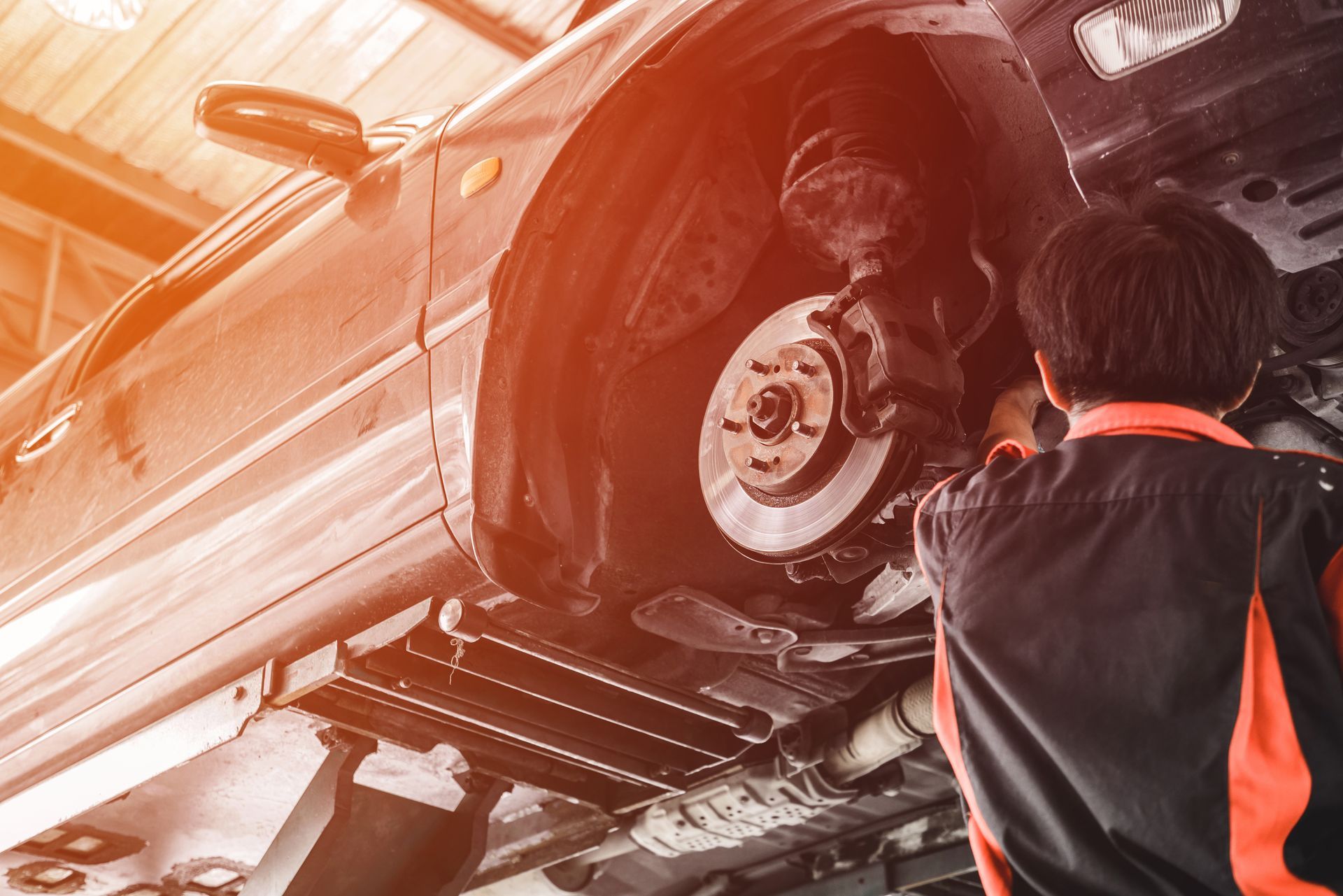
Wheel bearings can develop humming or growling noises. Brake hoses age. Calipers can begin sticking. Rotors can develop heavy rust or wear, and tire patterns can reveal alignment or suspension problems before the driver feels anything unusual.
This is also a good point to measure tread depth across all four tires rather than looking at one spot. Uneven wear tells us more than the remaining tread number alone.
Get 150,000-Mile Vehicle Service In Stevensville, MT, With DTS Auto Repair
If your vehicle has reached 150,000 miles, DTS Auto Repair in Stevensville, MT, can check the major wear areas, review its service history, and help separate repairs that need attention now from items you can plan for later.